The Neurodiversity Multiverse (Updated 2026)
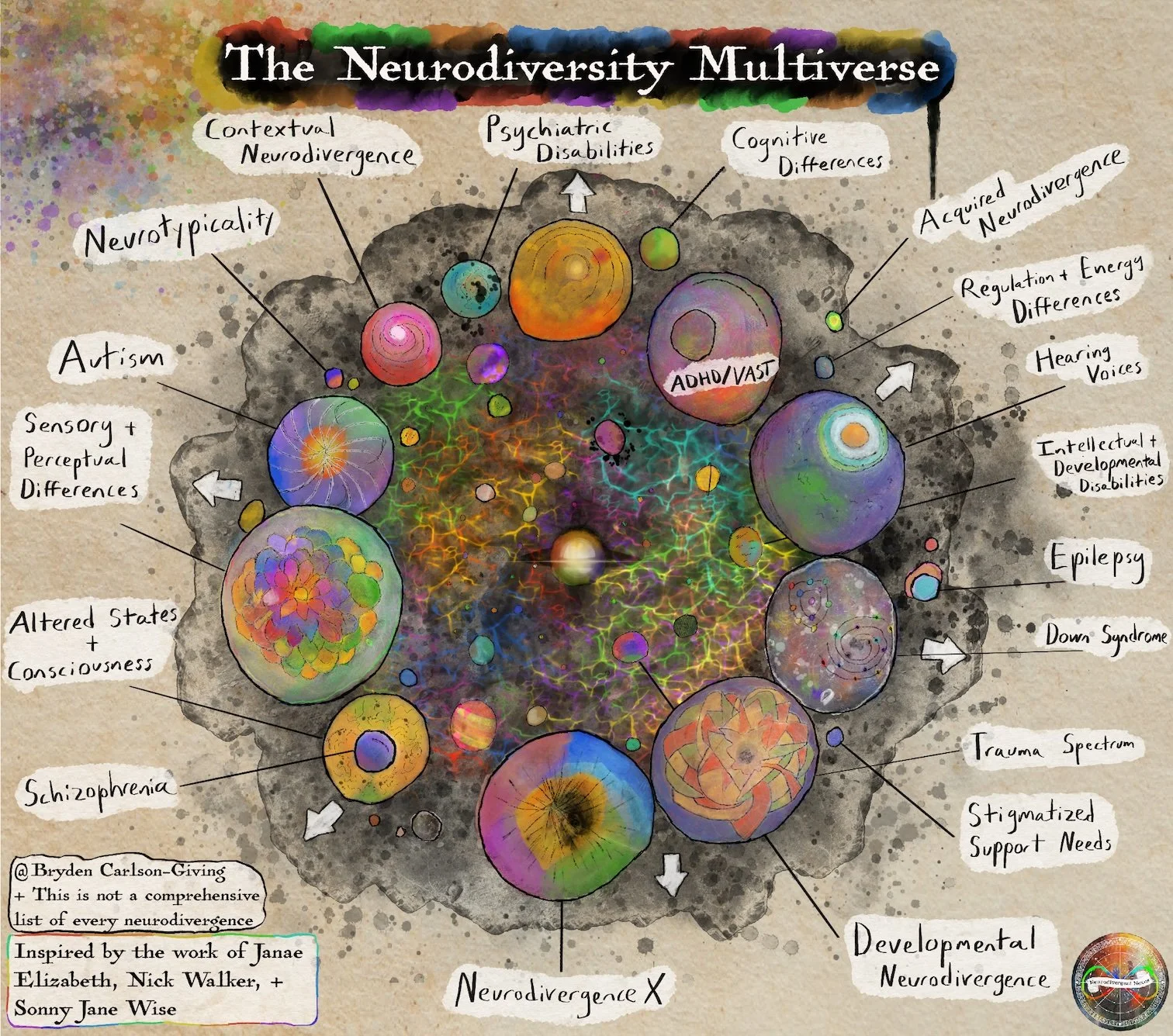
Neurodiversity is the diversity of human minds and recognizes the infinite variation in neurocognitive functioning within the human species (Walker, 2021). Anyone whose neurocognitive functioning diverges from dominating societal norms is Neurodivergent (Elisabeth, 2025). Some examples include:
Developmental and genetic neurotypes (e.g., autism, ADHD, learning differences, developmental disabilities, Down syndrome)
Acquired neurodivergence (e.g., PTSD, brain changes from chronic stress, TBI, stroke, neurocognitive differences as a result of COVID)
Neurodivergence isn’t just congenital; it can become acquired during life secondary to life events, society, etc. Many Neurodivergent advocates believe acquired neurodivergencies are not within the Neurodiversity umbrella, and I disagree. Let’s not gatekeep our community.
Psychiatric disabilities (e.g,. depression, anxiety, OCD, hearing voices)
Altered states and perception differences (e.g., sensory processing differences, schizophrenia)
Contextual neurodivergence (e.g., stigmatized support needs, non-normative behaviors and experiences, regulation and energy differences)
Neurodivergent was coined by Kassiane Asasumasu in 2000 to help distinguish between those whose experiences aligned with neurocognitive norms and those who were not necessarily a part of the “in-group” for neurocognitive experiences (Elizabeth, 2025). Neurodivergent is intentionally super inclusive and is a socio-political term, not a medical/clinical term. The neurodiversity framework, originating from the neurodiversity movement, provides practical ways to celebrate these differences in neurocognitive functioning. It challenges “normalcy” as the norm for well-being.
Oftentimes we hear of neurodiversity being identified as a “spectrum” or an “umbrella”; for me as a multiply Neurodivergent person, those categorizations have never felt like they were close to representing the beautiful and vivid complexity of neurodiversity. For me, each neurodivergence felt like its own universe of experiences.
For example within the ADHD/VAST universe (I’m a VASTer, have depression, and trauma), there are so many galaxies within that universe such as sensory processing, executive functioning, etc., and at any point in time, the stars of those galaxies are “colliding” because those galaxies are being activated at the same time. And not to make it feel even more expansive, the number of experiences of how one’s neurodivergence influences the Neurodivergent’s day or is impacted by society is infinite! For example, I could be out at dinner with some friends and while we are out at dinner our food arrives. Within the ADHD/VAST universe, the communication galaxy is colliding with my executive functioning galaxy, my coordination galaxy, and my sensory processing pattern galaxy, all of which are being activated at the same because I am trying to decide how I want to eat, smelling what I eat, the actual feeling of eating, trying to converse with my friends, trying to balance the food on my utensils, etc. In this tiny sliver of time, countless galaxies and stars are activated, illustrating the ever-expanding complexity of my ADHD/VAST universe. Do note that, just like other disabilities, neurodivergence can come with its challenges secondary to society being disabling or the neurodivergence itself being disabling. We can also recognize strengths do exist when it comes to be Neurodivergent. They are not mutually exclusive, and every Neurodivergent person has the right to view their neurodivergence in any way that resonates with them. Everyone is on their own journey regarding their disability identity, and this is beautiful and okay. Disability identity is complex! Neurodivergent occupations and ways of living are not simply Autistic play styles or differences in sensory processing, neurodivergent occupations include hearing voices, differences in communication and how you want to participate socially, differences in memory and learning, executive functioning, differences in how you experience time, how one focuses, emotional expression, motor skills, and even how you eat!
Some information about the Neurodiversity Multiverse:
- The design was inspired by my love for space, dark watercolor, and fantasy video games
- I included neurotypicality because, just as Sonny, the Lived Experience Informed Educator has shared, neurotypicality counts as neurodiversity. Neurodiversity is every single brain pattern/experience, and that includes neurodivergence and neurotypicality, just like how being heterosexual/straight is within the sexual orientation spectrum or cis-gender exists within the gender universe. Just like the title of their book (highly recommend checking it out), we’re all neurodiverse (but not everyone is Neurodivergent). It’s also important to remember that being neurotypical is a temporary identity, just like being non-disabled. For most people experience differences in neurocognitive functioning if they live long enough (age-related neurodivergence).
- Arrows -> meant to represent the multiverse is forever expanding
-Please know this illustration is not meant to cover every single neurodivergence, and I did include “Neurodivergence X” as a placeholder for the future new Neurodivergent universes we discover.
- The Neurodiversity Multiverse doesn’t necessarily align with the social model of disability that Mike Oliver initially conceptualized, which views impairment and disability as completely separate, and oppression is the primary source of disability. The Neurodiversity Multiverse aligns with neurodiversity frameworks, disability justice principles as created by Sins Invalid, and the cultural model of disability, recognizing impairment and disability are intricately intertwined and disability could be attributed to more factors than oppression. You can remove all of the societal barriers, and my neurodivergencies can still be disabling. Let me know if you want to talk more about this!
- This illustration will be one of many featured in the first neurodiversity-focused occupational therapy book, out April 2026!
- I asked and checked with individuals and resources created by the communities within each neurodivergence to ensure I am utilizing the most updated term to describe that disability. If I am using an incorrect term, please let me know and I will absolutely update the illustration.
- Please remember that it is up to the Neurodivergent individual to determine how they want to (or not) embrace their Neurodivergence. Neurodivergence is not intrinsically positive or negative, and the neurodiversity movement does not oppose treatments or cures for neurodivergence if that is what the Neurodivergent individual chooses. Like for myself, I am a Autistic, an ADHDer, and I also have depression. Being an AuDHDer has offered so many glimmers and colorful ways to experience the world, I would not let them go. My depression on the hand, I would gladly remove from my experience…What the movement does oppose is having others place neuronormative constraints or expectations on the individual, and discriminating against them. Neurodivergence is neutral, and it completely depends on the individual within the context of dominating neurocognitive norms (Walker, 2021).
If you would like to consider exploring your own neurodivergence, you should absolutely look into Sonny Jane Wise’s Neurodiversity Smorgasbord on their resources page. Sonny created the Neurodiversity Smorgasbord as an alternative framework for understanding neurocognitive differences outside of diagnostic labels, and to ultimately support self-discovery and self-understanding of neurodiversity beyond the DSM. The Neurodiversity Smorgasbord visualizes various characteristics, such as stimming, emotions, memory, sleep, altered states, voice hearing, and time perception with descriptions to help readers identify how much they resonate with that characteristic. To really support this exploration of Neurodivergent identity, they have a Neurodivergent Spectrum Chart (also on their resources page) where you can color in the impact of how your differences diverge from neuronormativity, and create your own unique profile. Exploring the Neurodiversity Smorgasbord and the Neurodivergent Spectrum Chart can deepen our appreciation for the incredible multiverse of human neurocognitive experiences.
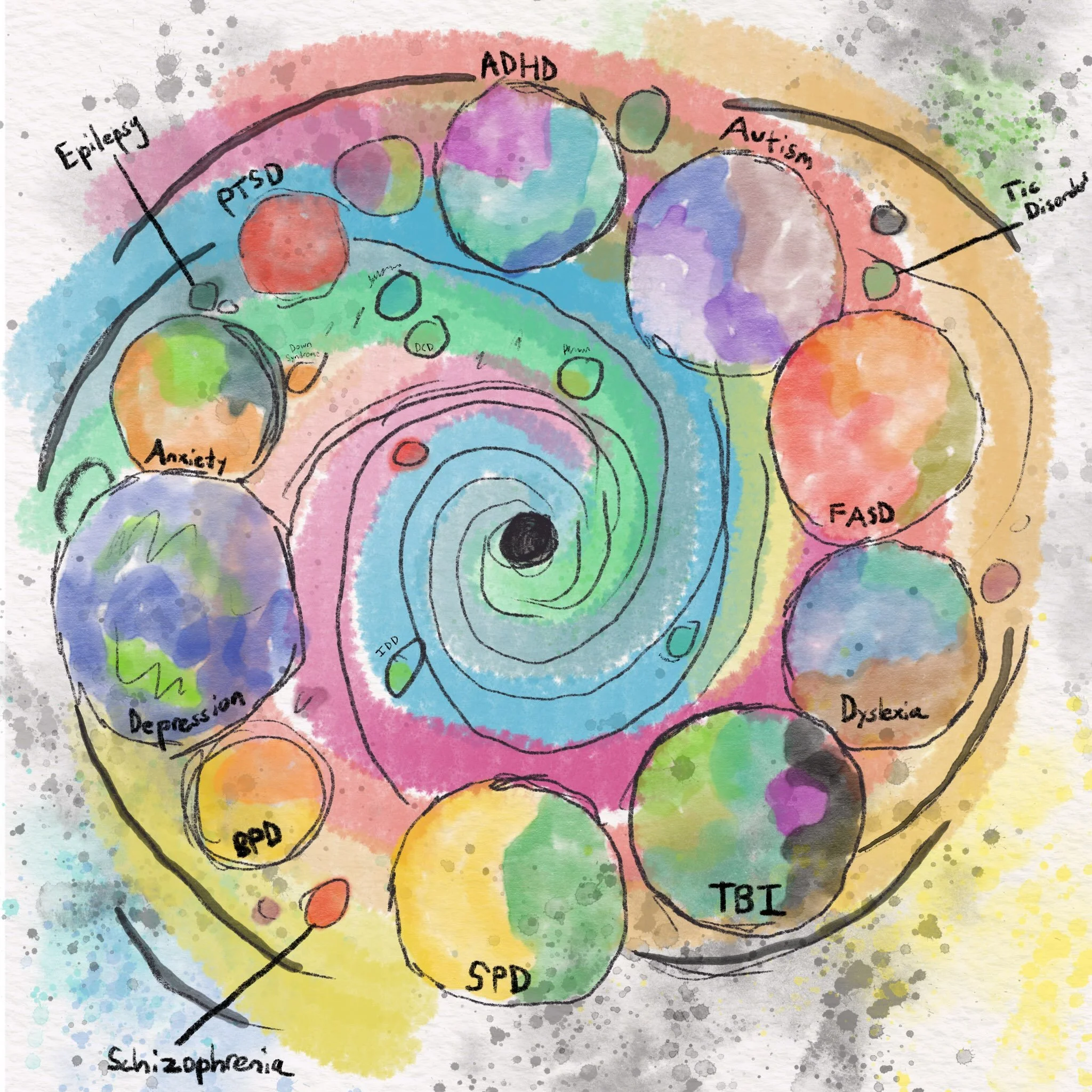
The version of the neurodiversity multiverse you see above is actually the second version. The original version (below) was heavily focused on labels of neurodivergence as designated by the Diagnostic and Statistical Manual of Mental Disorders (DSM) or those medically defined. I made the mistake of representing a multiverse that heavily insinuated that neurodivergence is a diagnosis or are only a diagnosis as defined by Eurocentric medical standards, and it’s not. Any experience that diverges from neuronormativity is neurodivergence. Many thanks to Sonny Jane Wise, Nick Walker, and Janae Elizabeth for helping me realize my inaccurate interpretations of neurodivergence.
The First Rendition of the Neurodiversity Multiverse

Abbreviations:
SPD = sensory processing differences, not disorder, because someone’s sensory experiences are valid forms of human diversity, and as the remarkable Winnie Dunn has shared, sensory processing patterns are a reflection of who we are and are not a pathology that needs fixing (of course unless the Neurodivergent individual themselves requests to attempt this)
BPD = borderline personality disorder
FASD = fetal alcohol spectrum disorder
ADHD/VAST = attention deficit hyperactive disorder / variable attention stimulus trait. VAST is a much more affirming alternative to ADHD (I mean, half of the name is super pathologizing [deficit, disorder], and VAST really honors this neurodivergence in a way that recognizes being a VASTer in an ableist world can have challenges, but also strengths. I’m a VASTer; happy to talk about this more in-depth if you are ever interested!
TBI = traumatic brain injury
PDA = pervasive drive for autonomy
IDD = intellectual and developmental disabilities
If you are Neurodivergent, I sincerely hope the neurodiversity multiverse brings you some amount of joy and resonates with you. Thank you for taking the time to read this post, and being cool anti-ableist humans
PS: Major props to The Autistic OT for helping me with the name!
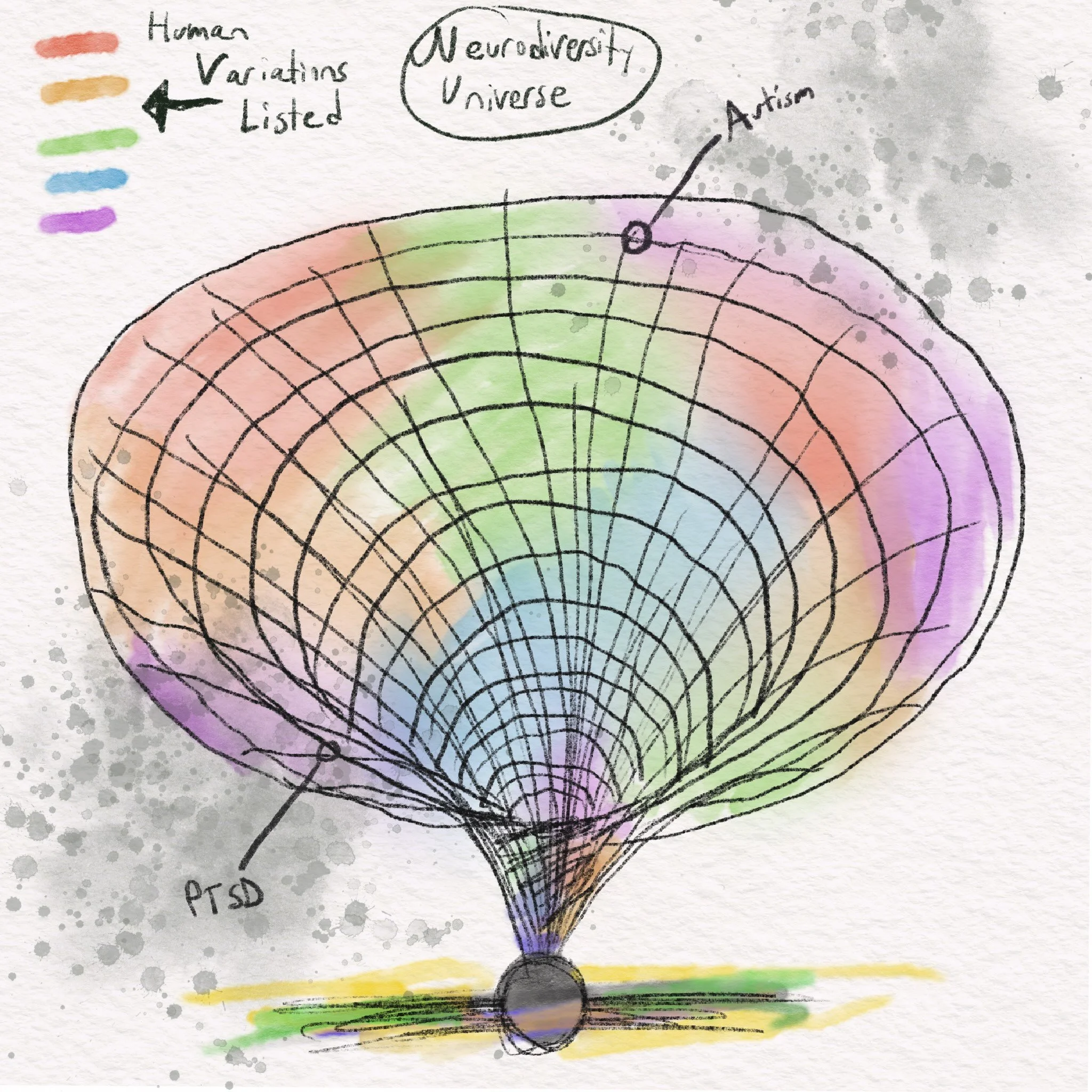
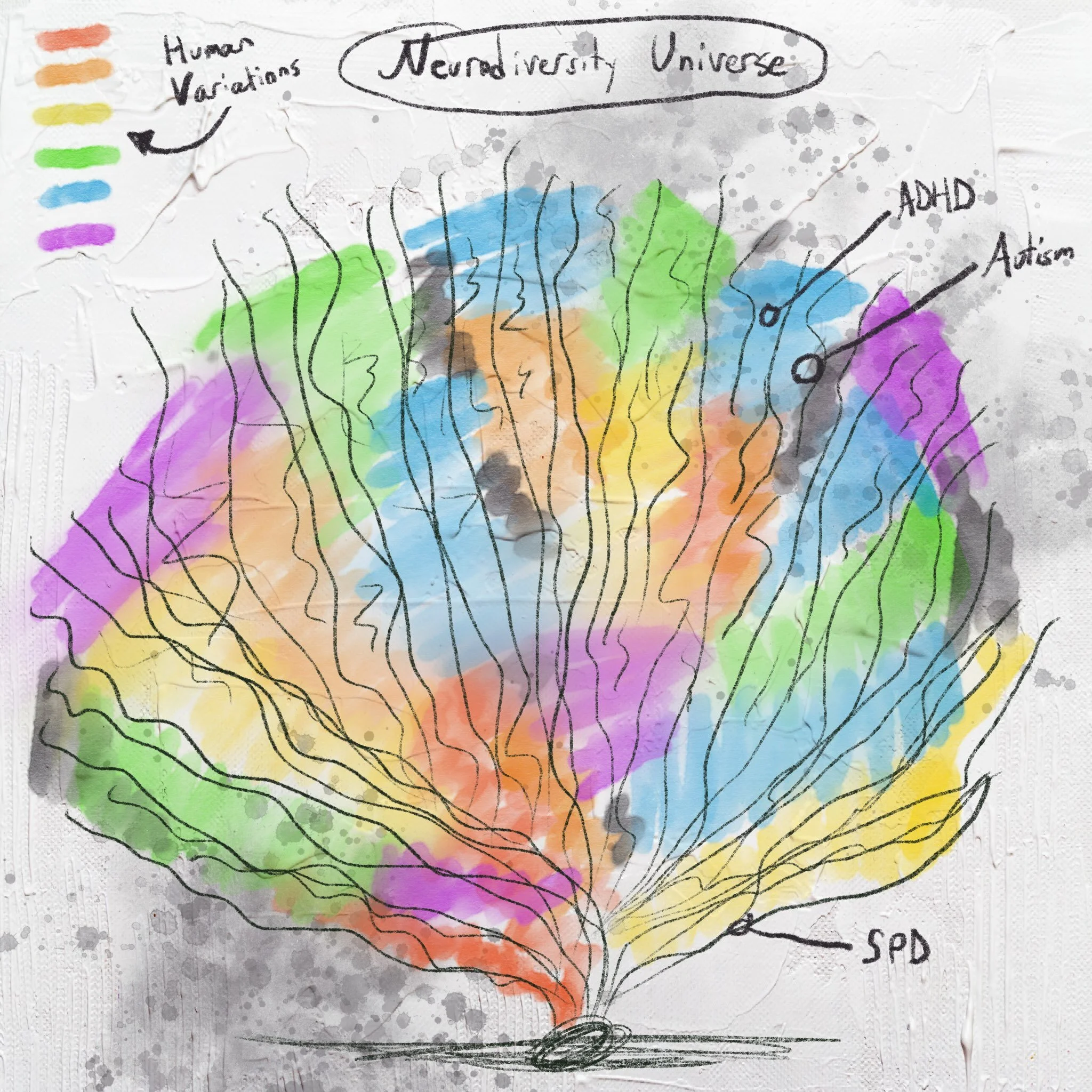
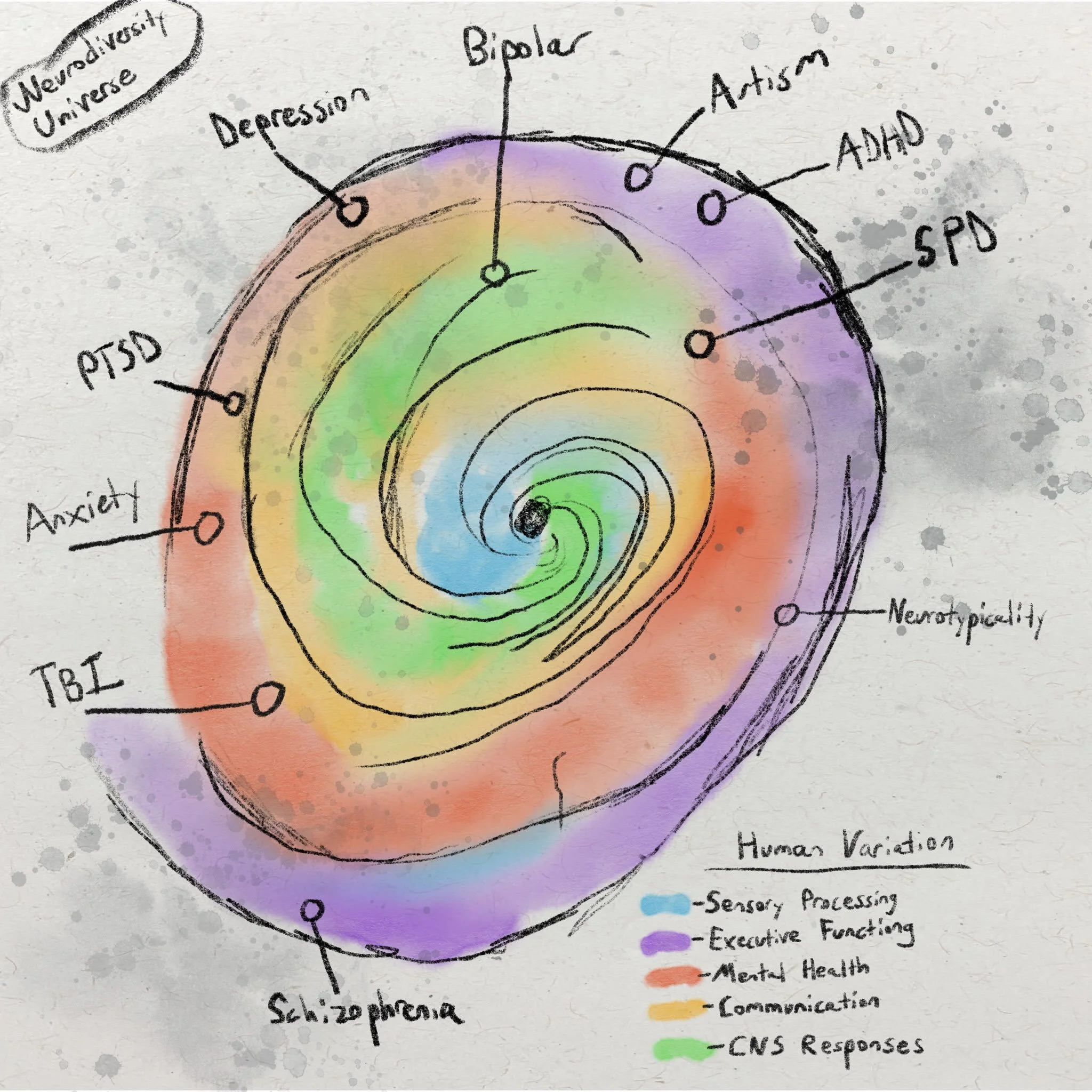
If interested, below are the rough sketches of the various neurodiversity multiverse designs I was toying with before landing on the final design (4th design)!
References
Elizabeth, J. (2025). Let’s talk about the original definition of neurodivergence. Facebook - Trauma Geek. https://www.facebook.com/TraumaGeek/posts/pfbid0H3DjFGXB4hqkyHpE62zkfr4yN2qxk7EvFMmCoCmg7nDycWmXrpSYWWmNkWpNH4GQl
Walker, N. (2021). Neuroqueer heresies: Notes on the neurodiversity paradigm, autistic empowerment, and postnormal possibilities. Autonomous Press.
Wise, S. J. (2023). We’re all neurodiverse. Jessica Kingsley Publishers.